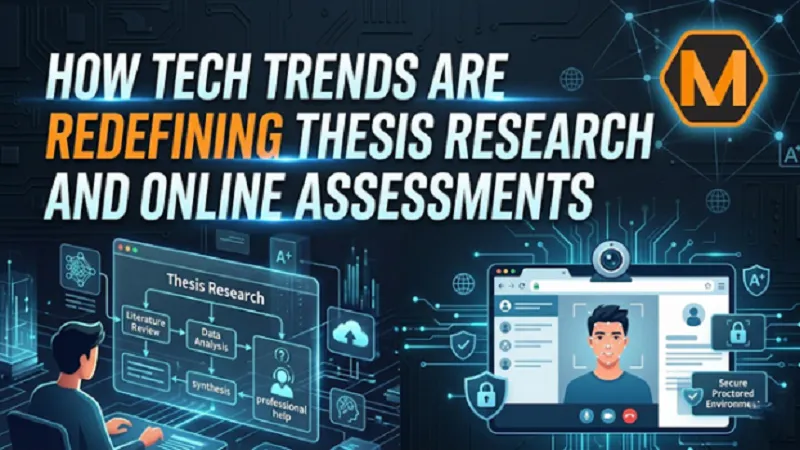
The landscape of higher education in 2026 has moved far beyond the simple digital uploads of the past decade. Today, undergraduate students find themselves at the intersection of advanced artificial intelligence, remote proctoring, and a globalized research environment. This shift isn’t just about using a computer instead of a notebook; it is a fundamental redefinition of how we prove our knowledge and contribute to scholarly conversations. For students across the globe, understanding these tech trends is no longer optional—it is the key to graduating with a competitive edge in an increasingly automated world.
The New Era of Scholar-Tech Workflows
Thesis research used to mean months of manual library searches and tedious coding of qualitative data. In 2026, the proliferation of AI has transformed these methods, allowing researchers to automate literature reviews through tools that synthesize thousands of papers in seconds. This automation doesn’t replace the student; instead, it shifts their role toward high-value tasks like study design and interpreting complex results. By integrating professional insights with automated data tools, students can produce work that is both technologically advanced and academically sound, bridging the gap between raw data and meaningful discovery.
The transition to digital-first research also means that “information gain” is the new gold standard. Professors are no longer looking for a summary of existing knowledge; they are looking for how a student uses technology to find a new angle. This requires a mastery of digital archives, cloud-based collaboration, and real-time data visualization. For an undergraduate, managing these moving parts while maintaining a high GPA can be overwhelming, making the use of strategic academic support a logical step in a high-pressure environment.
Redefining Online Assessments in 2026
Traditional “sit-down” exams are rapidly becoming relics of the past. Modern assessments now rely on a blend of behavioral analysis and identity verification to maintain integrity in a remote world. As universities move away from physical testing centers, the “exam room” has moved into the student’s bedroom, bringing with it a host of technical and psychological challenges.
| Feature | Impact on Students |
| AI Proctoring | Uses computer vision to detect unusual eye movements or audio anomalies during tests. |
| Browser Lockdowns | Prevents navigation away from the exam interface to ensure fairness and focus. |
| Authentic Assessment | Moves away from memorization toward real-world problem-solving and application. |
| Biometric Verification | Ensures that the person taking the test is the registered student through facial recognition. |
This digital shift has introduced a new dynamic: “stress equals preparation plus technology reliability.” While students can control their study habits, they often feel vulnerable to platform errors, sudden software updates, or internet glitches that could jeopardize their entire semester. To navigate this, many high-achieving students turn to Myassignmenthelp for expert guidance. Whether you need a mentor to do my exam for me or require a mock-proctored environment to practice in, having a professional partner ensures that technical anxiety doesn’t overshadow your academic proficiency. This support allows students to focus on mastering the content while the logistics and technical hurdles are handled by those who understand the nuances of the digital landscape.
From Information Retrieval to Knowledge Generation
Instructors are now redesigning how they assess learning, moving away from grading “take-home” work that general AI can easily simulate. Instead, the focus has shifted to synchronous or in-class assessments that require students to explain why scholars frame questions in specific ways. This change pushes undergraduates to act more like graduate researchers, demanding a deeper level of critical thinking and originality.
In this environment, the “copy-paste” era is officially dead. To rank well in their classes and eventually in the job market, students must demonstrate “human-centric” skills that technology cannot replicate: empathy, ethical judgment, and complex problem-solving. Tech trends are not just providing new tools; they are raising the ceiling for what is considered “average” work.
The Global Tone of Modern Education
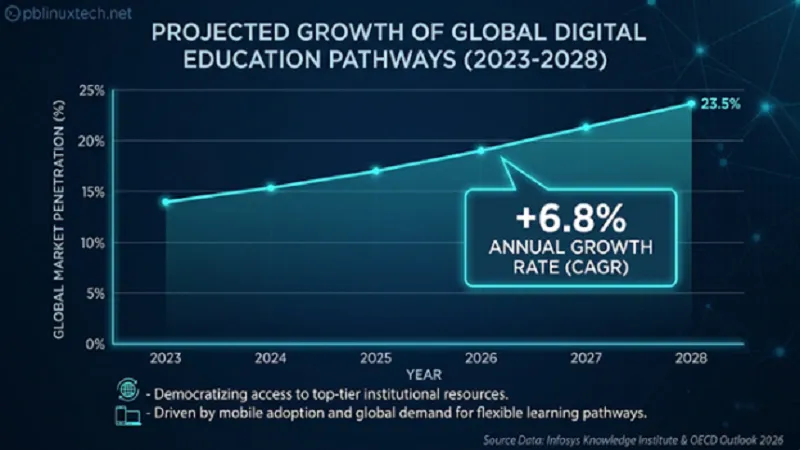
The digitalization of education has democratized access, allowing students in developing regions to engage with top-tier institutional resources at a fraction of the cost. By 2026, online learning penetration has grown significantly, driven by mobile adoption and a global demand for flexible pathways. This means your thesis or exam isn’t just competing with your classmates; it’s being measured against a global standard of digital literacy.
International students, in particular, face the double challenge of mastering a second language while navigating complex Western academic frameworks. Technology helps bridge this gap through real-time translation and grammar enhancers, but the core logic of a well-structured argument still requires a human touch. The global classroom is more connected than ever, but it is also more competitive, requiring students to be proactive about their academic health.
The Ethics of Technical Assistance
As we embrace these trends, the conversation around ethics has evolved. It is no longer about “using” or “not using” help; it is about how you use it. In the professional world, experts use consultants, editors, and technical assistants to produce the best possible results. Modern education is beginning to mirror this. Utilizing a service to understand a complex topic or to navigate a difficult exam format is increasingly seen as a form of “academic resource management.”
The key is transparency and integration. A student who uses a mentor to improve their thesis is learning the skills of collaborative research—a trait highly valued in the 2026 workforce. As long as the student remains the driver of the intellectual journey, technology and professional support serve as the engine that gets them to their destination faster and more reliably.
Frequently Asked Questions (FAQ)
Q.1. Is AI proctoring really accurate?
Ans: While AI proctoring platforms are highly advanced, they can sometimes flag “false positives”—misinterpreting normal behavior, like looking away from the screen to think, as suspicious. Most systems in 2026 include a human-in-the-loop review process where a real person checks flagged footage to ensure fairness and prevent unnecessary penalties.
Q.2. How has the role of the “Research Assistant” changed?
Ans: AI now acts as a primary research assistant by automating tedious tasks like citation management, formatting, and initial literature screening. This leaves the “human” researcher free to focus on the more subjective and creative aspects of the work, such as synthesizing new theories or conducting interviews.
Q.3. Why are exams becoming more “authentic” and less about memory?
Ans: Because technology can provide instant answers to “what,” “when,” and “where” questions, universities have shifted their focus to “how” and “why.” Authentic assessments require you to apply your knowledge to a unique, real-world scenario that can’t be solved by a simple search or a basic AI prompt.
Q.4. What is the biggest risk of using technology for research?
Ans: The main risk is “metacognitive laziness,” where a student relies so heavily on automated summaries that they lose the ability to critique the source material themselves. The best approach is to use technology to organize the data, but use your own brain to draw the final conclusions.
Q.5. How can I stay calm during an online proctored exam?
Ans: Preparation is the best antidote to anxiety. Do a “tech check” 24 hours before the exam, ensure your hardware is updated, and practice in a similar environment. Many students also find that working with academic mentors helps build the confidence needed to perform well under the gaze of a digital proctor.
Final Thoughts
The fusion of technology and education is a permanent shift. As we move deeper into 2026, the students who succeed won’t necessarily be the ones who know the most facts, but the ones who know how to use the best tools and services to showcase their potential. Whether it’s through advanced research software or strategic academic partnerships, the goal remains the same: proving that you are ready for the challenges of a digital world.
About The Author
Hello, I’m Mark Hales. As a senior academic consultant and content strategist, I specialize in bridging the gap between advanced technical literacy and scholarly excellence. My work focuses on helping students navigate the complexities of modern education by integrating data-driven research methods with professional standards.